

How to Track Conversational AI Journey Quality
The journey is the murky middle where experiences break. Learn how to identify friction, measure efficiency, and distinguish healthy engagement from struggle.
What Makes AI Journeys Different
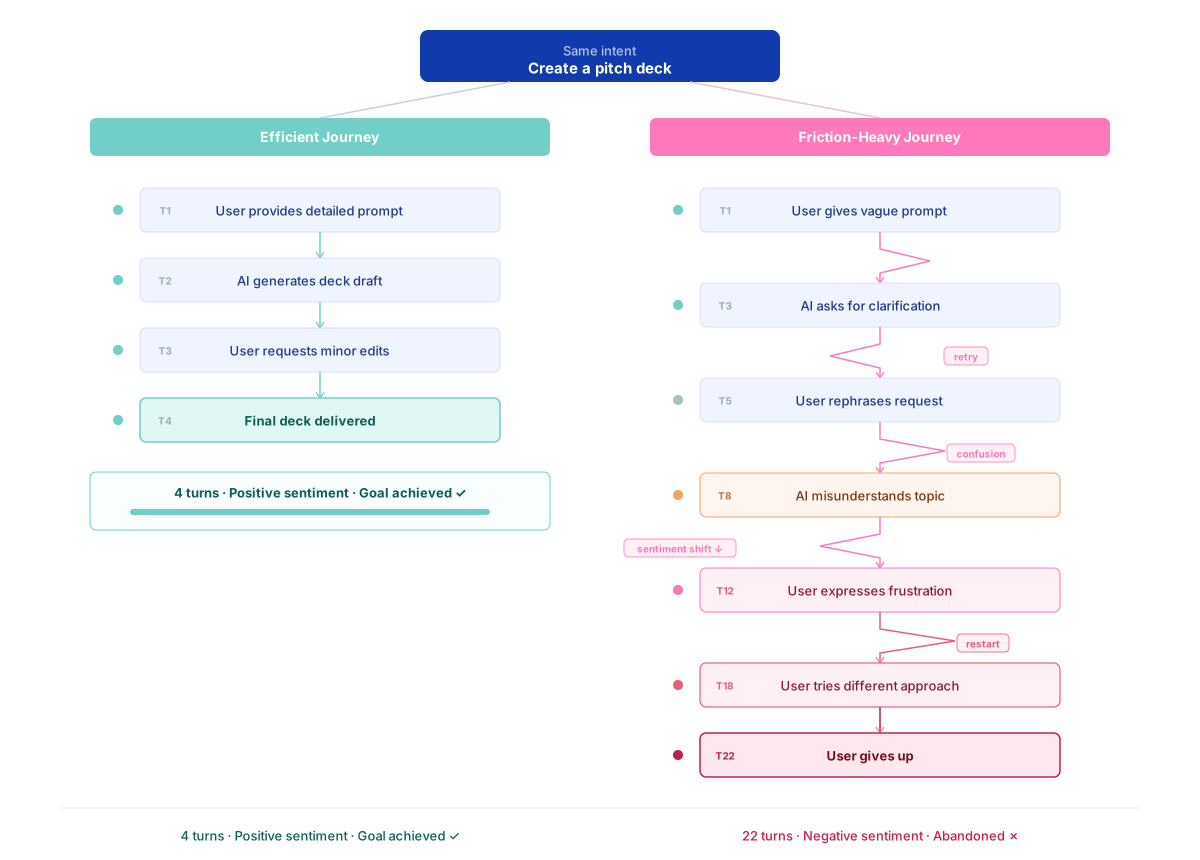
AI journeys are non-linear, variable length, and emergent. The same intent can produce wildly different journeys.
In traditional SaaS, if you know the user clicked "Create Project," you know they are on step 1 of a 5-step flow. You know what step 2 is. You know where they might drop off. The journey is predictable because you designed it.
In AI products, if you know the user said "help me build a presentation," you know almost nothing about what happens next. The AI might ask a clarifying question. It might generate a draft immediately. The user might refine it in 3 turns or 30. The journey depends on the conversation, and the conversation depends on both the user and the AI.
This makes journey analysis both harder and more important. Harder because there are no predefined stages to measure against. More important because the journey is where most of the experience happens, and where most of the problems hide.
Journey Length and Efficiency
Turns to outcome is the primary journey metric. It measures how many exchanges occur between the customer stating their intent and reaching a resolution.
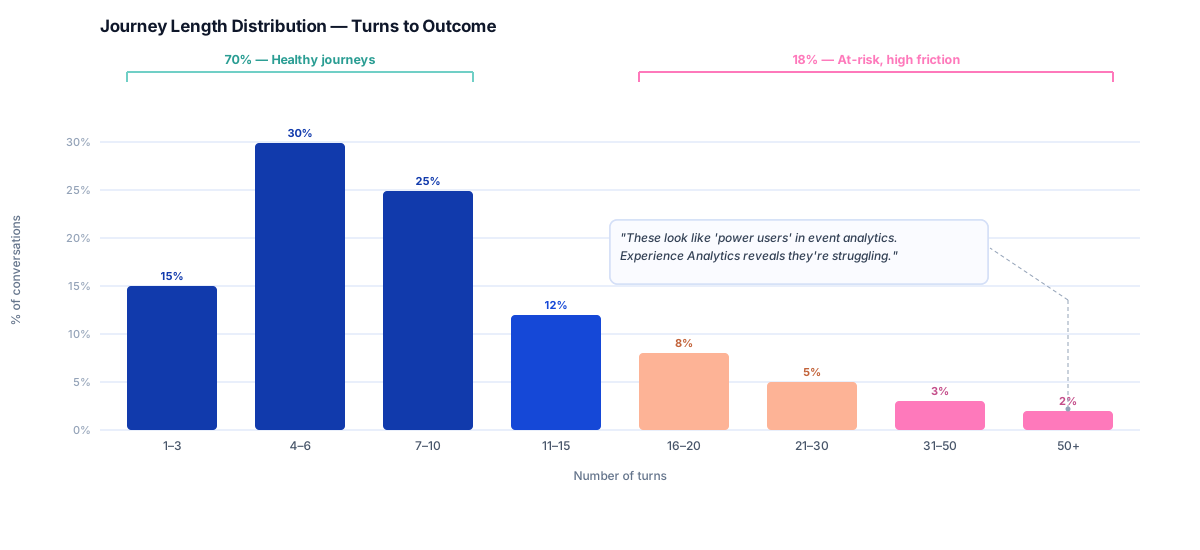
What "efficient" looks like varies by intent type. A simple question might resolve in 2-3 turns. A complex task like generating a multi-page document might legitimately take 10-15 turns of refinement. The benchmark is not a universal number but an intent-specific baseline.
The distribution matters more than the average. A healthy distribution has most conversations clustered in a narrow range with a small tail. An unhealthy distribution has a wide spread or a long tail of 30+ turn conversations.
When longer journeys are okay: exploration intents, complex creative tasks, and conversations where the customer is actively refining a good output. When longer journeys are problematic: simple tasks that should resolve quickly, conversations where turn count increases because of confusion or retries, and any journey where sentiment deteriorates as length increases.
Identifying Friction Points
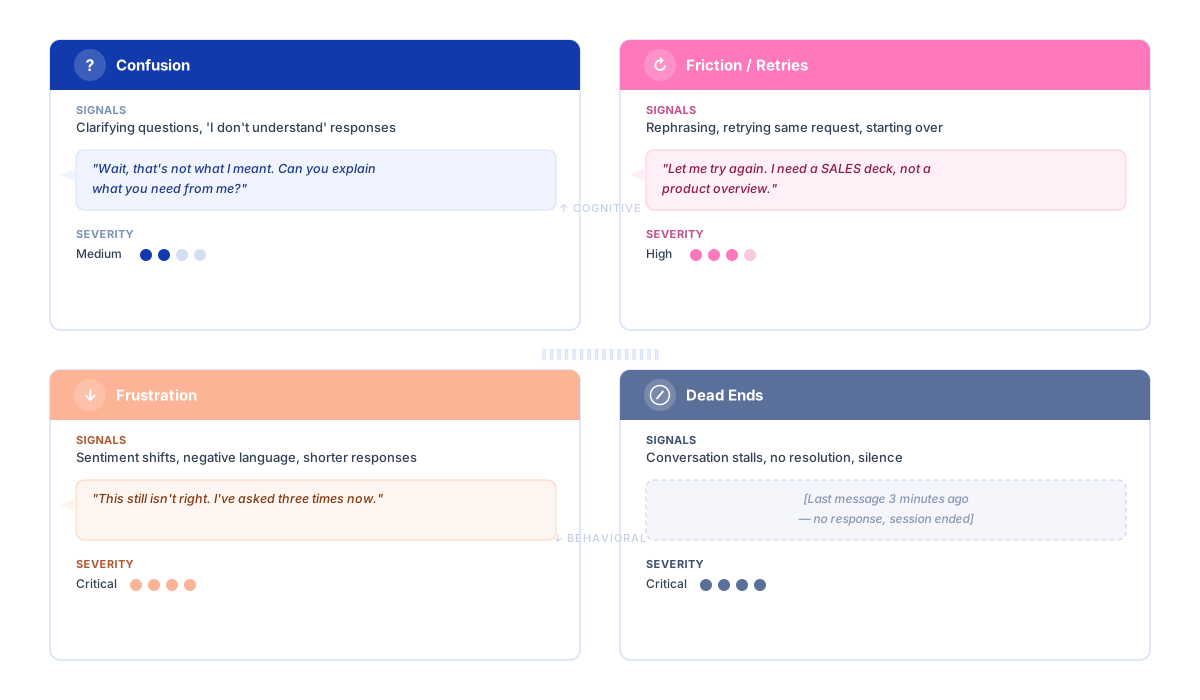
Friction is what separates a good journey from a bad one. Four types of friction signals appear in conversational AI.
Confusion signals: The customer does not understand the AI's response or does not know what to do next. Indicators include clarifying questions ("What do you mean?"), expressions of confusion ("I don't understand"), and requests to repeat or rephrase.
Retry patterns: The customer is trying to accomplish something and the AI is not getting it right. Indicators include rephrasing the same request, asking for the same thing multiple ways, and starting the conversation over.
Frustration indicators: The customer's emotional state is deteriorating. Indicators include sentiment shifting from neutral or positive to negative, increasingly short or curt responses, and explicit frustration language ("This still isn't right. I've asked three times now.").
Dead ends: The conversation reaches a point where neither the customer nor the AI can move forward. Indicators include long pauses followed by session end, the AI repeating itself without progress, and the customer stopping mid-conversation without resolution.
Each friction type requires a different intervention. Confusion needs better AI explanations or guided options. Retries need better intent inference. Frustration needs escalation or proactive outreach. Dead ends need fallback paths or human handoff.
Journey Patterns and Segments
Journey patterns reveal customer segments that raw metrics miss.
Power users: Arrive with specific intents, reach outcomes quickly, positive sentiment throughout. These are your best customers. Learn what they do differently and replicate it for others.
Struggling users: Arrive with vague intents, take many turns, sentiment deteriorates. These customers need help. They may not ask for it. The journey data identifies them before they churn.
Exploring users: Variable journey lengths, neutral sentiment, may not have a clear outcome. These are often new users evaluating the product. The journey data tells you whether exploration converts to productive use.
Workaround users: Arrive with intents the product was not designed for, find creative paths to approximate outcomes. These customers are telling you what to build next through their behavior.
Segmenting by journey pattern connects directly to product and business actions. Power user patterns inform onboarding design. Struggling user patterns inform product improvements. Exploring user patterns inform trial-to-paid conversion strategy.
Conversation Flow Analysis
Flow analysis identifies where in the conversation customers get stuck. The goal is to find the common breakdown points across many conversations.
The approach: Map conversations by turn number and classify each turn. Turn 1 is typically intent expression. Turns 2-3 are often clarification or first response. Middle turns are refinement or iteration. Final turns are resolution or abandonment.
Look for patterns: Where does confusion cluster? If confusion signals concentrate at turn 2-3, the AI's initial response is not meeting expectations. If friction clusters in the middle turns, the refinement loop is broken. If abandonment spikes at a specific turn count, that is where the experience is failing.
Designing interventions: Each pattern maps to a specific intervention. Early confusion suggests the AI needs better initial responses or should ask clarifying questions before generating. Mid-journey friction suggests the refinement interface needs improvement. Late abandonment suggests the AI is failing to converge on what the customer wants.
The goal is not to eliminate all friction. Some friction is productive — a customer refining their request is a natural part of the creative process. The goal is to identify unproductive friction and remove it.